
To make a T-shirt design in Print-on-Demand (POD) sell well, it needs to be simple, readable, technically high-quality, and clearly targeted to the interests of the audience. For a t-shirt design to sell well in the POD market, it must be simple, legible, of high technical quality, and resonate with the target audience’s interests.
Contents
1. Start with a Niche and an Idea
- Define a specific audience: moms, gamers, IT professionals, dog lovers, travelers, etc.
- Create one clear idea per design: a short phrase + a single symbol/icon, not a multitude of different elements.
- Avoid directly copying brands, characters, and logos (you risk bans and complaints).
Find a profitable niche for your POD store in 2026
2. Simple and Readable Visuals
- Use minimal details, without “visual clutter” — overloaded designs are harder to read from a distance and sell worse.
- Remove the background from the image to avoid a “square sticker” on the chest; leave it transparent or with a neat outline.
- Maintain contrast: a light print on a dark T-shirt, a dark one on a light one; avoid combinations where the text gets lost.
Check out the most profitable POD products in 2025
3. Text and Fonts
- No more than 2–3 fonts in one design, preferably 1–2, to avoid chaos.
- Highlight the main word with size or style, making the secondary text simpler and smaller.
- Check readability from a distance: reduce the layout on the screen to ~5–6 cm and see if it’s clear what is written.
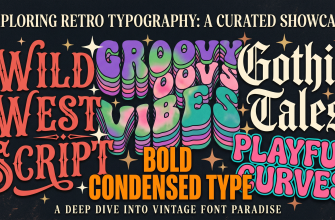
Discover a variety of fonts for your designs
4. Colors and Style
- Limit the palette to 2–3 key colors — this is both cheaper to produce and looks neater.
- Black and white T-shirts are the most versatile and popular; it’s easier to choose print colors for them.
- Ensure the joke/phrase and visual style match in mood (no childish font for a brutal text and vice versa).
Explore different graphics for your projects
5. Layout, Size, and File Quality
- The best-selling placement options are the center of the chest, less often a large print on the back or a small logo on the chest + a large one on the back.
- Avoid placing the print too low — it may look bad on the figure and visually “weigh down” the stomach.
- Use vector (SVG, AI, PDF) or high-resolution raster files (usually from 300 dpi and of a physical size that meets the service’s requirements).
Browse through various design assets
6. Checking for the POD Platform
- Be sure to read the technical requirements of the specific service (Printful, Printify, Gelato, etc.): file size, color profile, permissible print areas.
- Create mockups on models and different T-shirt colors — this immediately shows where the design gets lost or is poorly readable.
- Test several variations of one idea (different size, placement, one line vs. two lines of text) and see what gets more clicks and purchases.
Read the ultimate guide to POD platforms
Explore promising POD categories for 2025-2026